


…plans zero duty on raw materials, tackles import imbalance
The National Automotive Design and Development Council (NADDC) has moved to tackle the mounting challenges confronting Nigeria’s automobile manufacturers, pledging to push for zero duty on imported raw materials and stronger policies to protect locally produced vehicles.
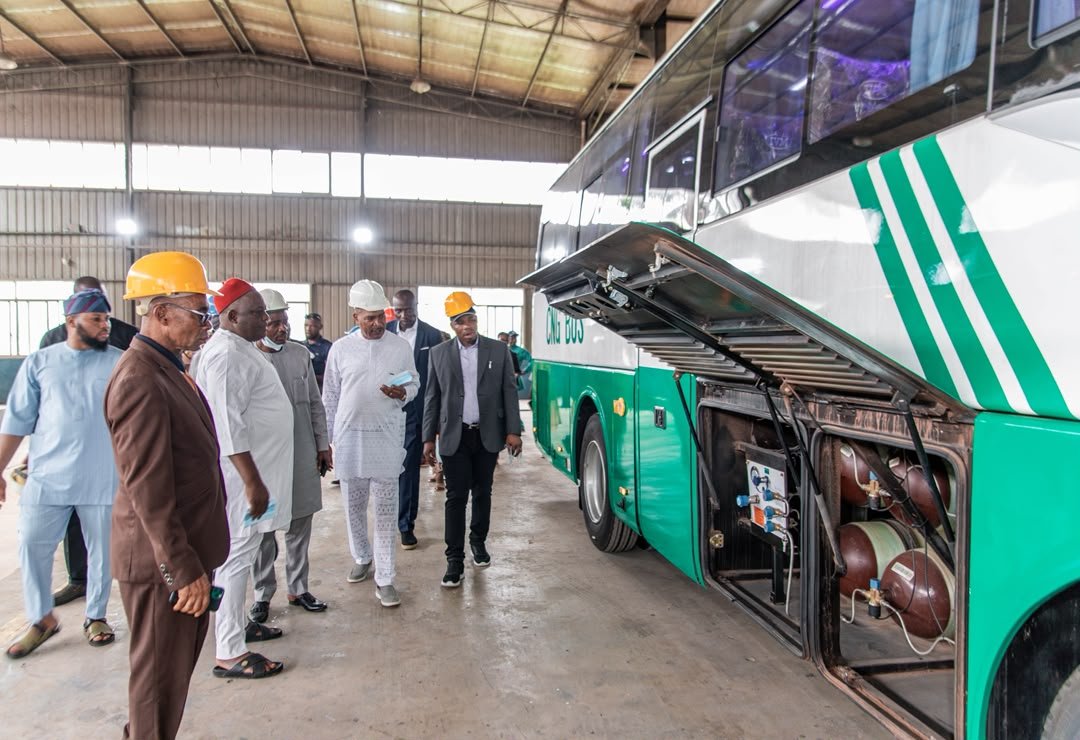
The commitment followed a familiarisation and listening tour of Innoson Vehicle Manufacturing Company (IVM), Nnewi, and Kojo Motors, Umunya, both in Anambra State, by the NADDC Governing Board and management.
Led by the Board Chairman, Chief Emma Eneukwu, OFR, and the Director-General/Chief Executive Officer, Otunba Oluwemimo Joseph Osanipin, the delegation inspected barely 24 hours after commencing the nationwide tour in Lagos.
The exercise was designed to assess the manufacturers’ production capacities, technical capabilities, investments and challenges, while obtaining first-hand information that would guide the Council’s interventions.
Speaking after inspecting Innoson’s facilities, Osanipin said the scale of investment by the indigenous manufacturer had dispelled misconceptions that the company merely assembled imported vehicles.
“We have seen how Innoson vehicles are built from scratch, and that is why we brought all the members of the Board and people who hitherto thought the company merely assembled vehicles. You can see the level of investment here,” he said.
He said the Council had also inspected Innoson’s massive new facility for electric vehicles (EVs), compressed natural gas (CNG) vehicles and heavy-duty trucks, describing the investment as being in line with the Federal Government’s clean-energy agenda.
However, Osanipin said manufacturers were being weighed down by high tariffs on imported raw materials and inadequate protection from competing imported vehicles.
“We have heard their complaints about high tariffs and how their investments are not protected. We will take the complaints to the right quarters and canvass for zero duty on the importation of their raw materials,” he said.
According to him, manufacturers pay duties on imported steel and other inputs, with the additional costs eventually reflected in the prices of locally produced vehicles.
He argued that the situation becomes more difficult when fully built imported vehicles enjoy favourable duty treatment, making locally manufactured vehicles less competitive.
“A situation where importers of fully built vehicles bring them in at zero duty affects the patronage of these vehicles that are manufactured in Nigeria,” Osanipin said.
He assured manufacturers that NADDC would present their concerns to the relevant authorities and seek policy measures capable of improving their competitiveness.
Earlier, Eneukwu called for a stronger automotive industry law to empower the NADDC to regulate the sector effectively, check the influx of used and substandard vehicles and create an enabling environment for local manufacturers.
He also stressed the need to deepen local content, technology transfer and skills development to move Nigeria beyond vehicle assembly to genuine automotive manufacturing.
At Innoson, Chairman and Chief Executive Officer, Chief Innocent Chukwuma, CON, called for greater support for CNG and electric vehicles, particularly as a response to high energy costs and the need for cleaner transportation.
Chukwuma also urged a review of vehicle import-duty concessions which, he said, place local manufacturers at a disadvantage.
At Kojo Motors, Executive Director Mr Chinedu Oguegbu said the company had operated in the industry for more than 30 years and developed partnerships with global Original Equipment Manufacturers.
He said its partnership with Yutong had enabled it to assemble the global manufacturer’s vehicles in Nigeria, while its OMAA brand was being produced with plans for international expansion.
The NADDC delegation commended both companies for their investments, particularly in EV and CNG technology, and reaffirmed its commitment to strengthening local content, technology development and sustainable growth of Nigeria’s automotive industry